Phonics Games That Actually Work (Why Hungry Hippos Helps Kids Stop Guessing)
Let me guess—you’ve taught the phonics skill.
You’ve practiced it.
You’ve sent home worksheets. And somehow… students are still guessing when they read. If that sounds familiar, you’re not doing anything wrong. This is one of the most common frustrations I hear from teachers and parents working with early readers and struggling readers. The issue usually isn’t phonics instruction.
It’s how students are practicing phonics.
Why Phonics Worksheets Don’t Always Stick
Worksheets have their place—I use them too. But on their own, they’re often too passive for kids who struggle with decoding. Here’s what I see happen a lot:
- Students rush to finish
- They look at the picture instead of the sounds
- They guess the word because it “looks right”
That doesn’t build strong decoding skills. And it definitely doesn’t support the Science of Reading, which tells us students need explicit, repeated practice mapping sounds to letters. This is where phonics games—the right kind—make a huge difference.

Why Phonics Games Help Struggling Readers More Than You Think
When phonics games are designed well, they naturally fix the problems worksheets can’t. Good phonics games:
- Slow students down
- Force sound-by-sound decoding
- Provide repetition without boredom
- Lower anxiety for hesitant readers
Instead of guessing, students actually say the sounds, read the word, and try again. That repetition is exactly how reading skills become automatic.
What Makes a Phonics Game Science of Reading Aligned?
Not every phonics game supports real reading growth. A Science of Reading aligned phonics game should:
✔ Focus on one phonics skill at a time
✔ Follow a clear scope and sequence
✔ Require students to decode or spell (not guess)
✔ Work for small groups, centers, and intervention
✔ Be easy to repeat all year long This is the lens I use when I create resources—and it’s exactly how the Hungry Hippos Phonics Game was designed.
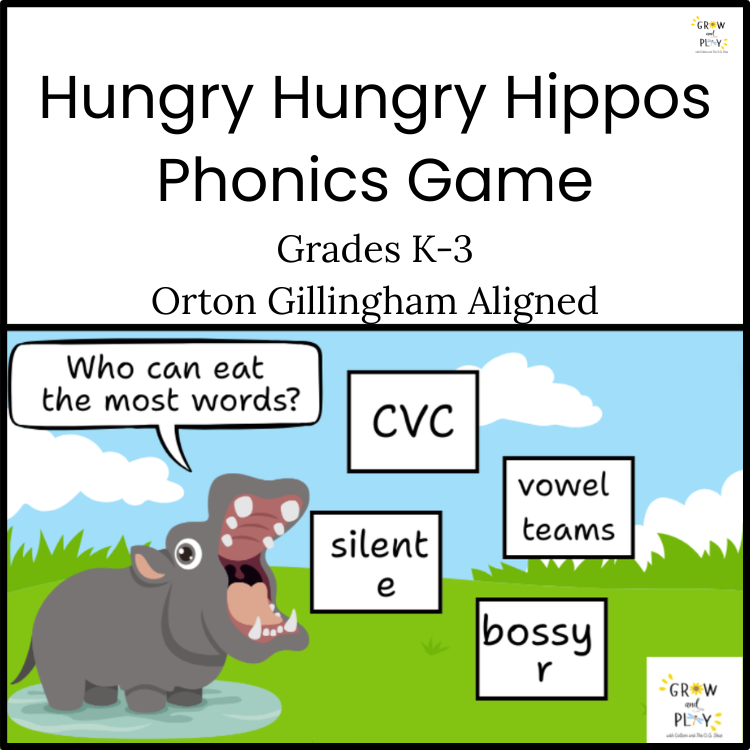
How the Hungry Hippos Game Builds Decoding Skills
The Hungry Hippos Phonics Game is a printable, low-prep phonics game that gives students the repetition they need—without feeling like more work. Each game board targets one specific phonics pattern, so students aren’t overwhelmed or jumping between skills.
Skills Included:
- CVC words
- Digraphs
- Blends
- Silent E
- Vowel Teams
- Bossy R
Here’s what students actually do:
- Read or build a word
- Say each sound out loud
- Decode or spell before feeding the hippo
- Repeat the process again and again
Those repeated decoding opportunities are what help phonics finally stick.
Where This Phonics Game Fits in Your Reading Block
Teachers use this game:
- During small group phonics instruction
- As a literacy center
- For reading intervention
- In tutoring and homeschool settings
Because it’s flexible and reusable, it works all year—not just for one lesson. You can find the Hungry Hippos Phonics Game on Teachers Pay Teachers and easily rotate it through different phonics skills as students progress.
Why Teachers Keep Reaching for Games Like This
Teachers tell me they love this game because:
- Students stay engaged longer
- Guessing decreases
- Confidence increases
- Phonics practice finally feels productive
And best of all—it supports real reading growth, not just skill practice on paper.
If phonics instruction isn’t transferring to reading, the answer usually isn’t more worksheets. It’s better practice. Phonics games like this give students meaningful repetition, structure, and confidence—all things struggling readers need to become successful decoders.